- Paragon-roofing
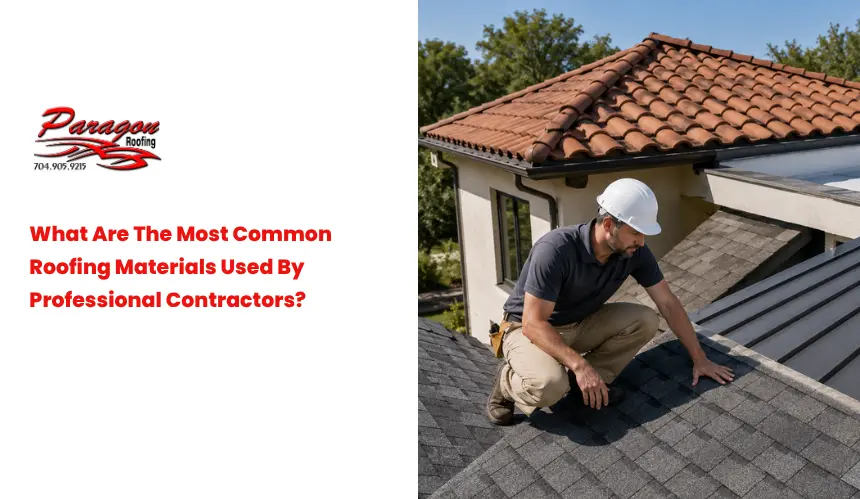
What Are The Most Common Roofing Materials Used By Professional Contractors?
Roofing material selection affects far more than just a property’s appearance. The type of roofing installed directly influences structural durability, moisture resistance, thermal performance, maintenance requirements, weather protection, and long-term repair costs. Professional roofing contractors evaluate multiple factors before recommending materials, including climate conditions, roof slope, drainage behavior, wind exposure, insulation performance, installation complexity, and expected lifespan.
Different roofing systems perform differently under environmental stress. Some materials prioritize affordability and installation speed, while others focus on longevity, energy efficiency, impact resistance, or architectural aesthetics. Roofing contractors also consider how specific materials respond to UV exposure, freeze-thaw cycles, coastal moisture, heavy rainfall, hail impact, and temperature fluctuation over time.
Understanding the most commonly used roofing materials helps homeowners make more informed decisions about durability, maintenance expectations, and long-term property protection. The following sections explain how different roofing systems function, where they perform best, and why contractors choose certain materials for specific structural and environmental conditions.
Why Roofing Material Selection Matters For Long-Term Performance
A roof functions as a continuous protective barrier against water intrusion, thermal transfer, wind uplift, and environmental deterioration. Roofing material selection affects how efficiently the structure handles moisture drainage, heat exposure, insulation retention, and structural stress over time.
Professional contractors evaluate roofing materials based on several operational factors:
- Weather resistance
- Installation compatibility
- Structural weight load
- Energy efficiency
- Repair accessibility
- Expected service lifespan
- Wind resistance
- Moisture protection
- Long-term maintenance requirements
The wrong roofing material can increase repair frequency, reduce energy efficiency, and accelerate structural deterioration beneath the roofing system.
How Climate Conditions Influence Roofing Material Choice
Environmental exposure plays a major role in determining which roofing materials contractors recommend. Roofing systems installed in humid coastal regions face different challenges than roofs exposed to snow accumulation, hail impact, or prolonged heat exposure.
For example:
- Asphalt shingles perform well in many moderate climates.
- Metal roofing handles heavy rainfall and snow shedding efficiently.
- Clay tiles effectively tolerate intense heat and UV exposure.
- Slate roofing offers exceptional longevity in colder climates.
- Wood shakes require careful moisture management in humid regions.
Contractors typically match roofing materials to local environmental stress patterns rather than relying only on appearance or cost.
Why Roofing Weight And Structural Compatibility Matter
Some roofing systems place significantly more weight on a property’s structural framing. Heavier materials such as slate and clay tile may require additional structural reinforcement before installation.
Roof load considerations become especially important for:
- Older homes
- Historic properties
- Large-span roof systems
- Buildings with aging framing
- Areas with heavy snow accumulation
Professional roofing contractors evaluate whether the structure can safely support the selected roofing material before installation begins.
Asphalt Shingles Remain The Most Widely Used Roofing Material
Asphalt shingles continue to dominate residential roofing because they combine affordability, efficient installation, easy repair, and broad design versatility. Professional contractors frequently recommend asphalt roofing to homeowners seeking balanced performance without the higher costs of premium roofing systems.
Modern asphalt shingles are manufactured in multiple styles, including three-tab, architectural, and luxury dimensional products.
Why Contractors Frequently Recommend Asphalt Roofing
Asphalt shingles provide reliable water-shedding performance while remaining relatively simple to install and repair. Their widespread availability also helps reduce replacement costs and repair delays.
Common advantages include:
- Lower installation costs
- Faster installation timelines
- Broad color selection
- Moderate weather resistance
- Easier replacement procedures
- Compatible ventilation systems
- Readily available materials
Architectural shingles, in particular, offer improved durability and wind resistance compared to older three-tab systems.
What Limitations Asphalt Shingles Have Over Time
Although asphalt roofing remains popular, prolonged UV exposure and temperature fluctuation gradually break down the material. Over time, shingles may lose protective granules, curl at the edges, crack, or become moisture-vulnerable.
Common long-term concerns include:
- Granule loss
- Heat-related aging
- Wind uplift damage
- Moisture infiltration
- Reduced lifespan in extreme climates
Routine roof inspections help identify these aging patterns before water intrusion affects underlying decking materials.
Metal Roofing Has Become Increasingly Popular For Durability
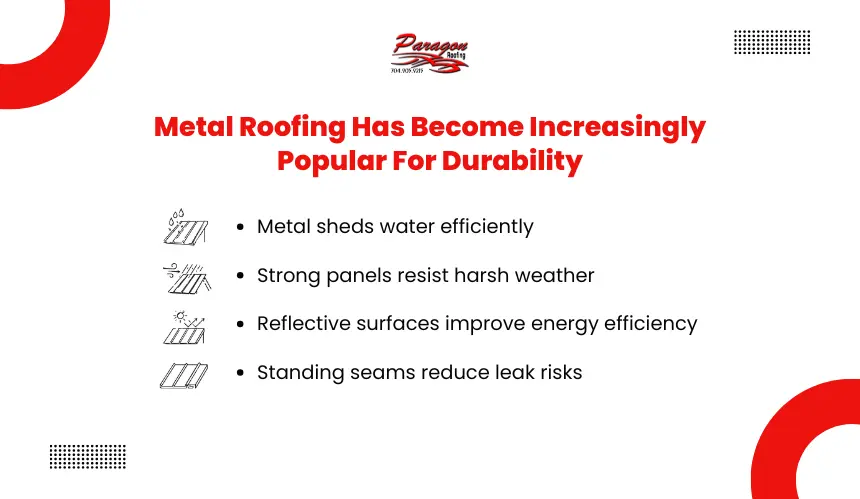
Metal roofing systems have gained popularity due to their long lifespan, energy efficiency, fire resistance, and weatherproofing. Professional contractors often recommend metal roofing for properties exposed to severe weather conditions, heavy rainfall, snow accumulation, or prolonged solar exposure.
Modern metal roofing systems include standing seam panels, corrugated panels, aluminum roofing, steel roofing, and coated metal assemblies.
Why Metal Roofing Performs Well In Harsh Weather
Metal roofs efficiently shed water, snow, and debris due to their smooth surface. This reduces the accumulation of standing moisture, which can contribute to premature deterioration in other roofing systems.
Metal roofing also offers:
- High wind resistance
- Fire resistance
- Reduced moisture retention
- Lower maintenance frequency
- Strong impact durability
- Thermal reflectivity
Standing seam systems are especially valued for their concealed fastener design, which reduces the risk of long-term water penetration.
How Metal Roofing Improves Energy Efficiency
Reflective metal surfaces help reduce solar heat absorption during warmer months. This lowers attic heat buildup and may improve indoor cooling efficiency.
Many coated metal roofing systems are engineered with reflective finishes that help:
- Reduce radiant heat transfer
- Lower cooling demand
- Improve attic temperature control
- Minimize thermal expansion stress
This makes metal roofing particularly beneficial in regions exposed to prolonged sun and high summer temperatures.
Clay And Concrete Tile Roofing Offer Long-Term Durability
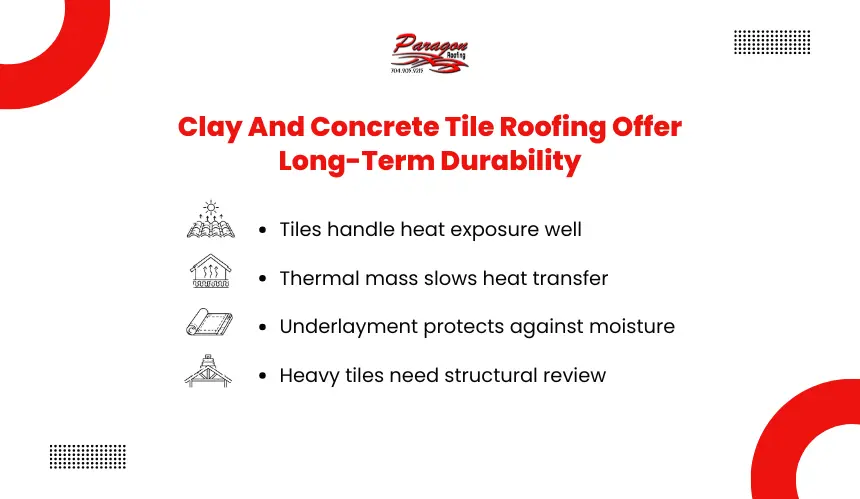
Clay and concrete tile roofing systems are commonly used in warmer climates due to their heat resistance, moisture durability, and architectural appeal. Professional contractors often recommend tile roofing for properties requiring extended lifespan performance and enhanced thermal protection.
Tile systems are especially common in Mediterranean, Spanish-style, and Southwestern architectural designs.
Why Tile Roofing Handles Heat Exposure Effectively
Clay and concrete tiles naturally resist prolonged UV exposure better than many lighter roofing materials. Their thermal mass helps slow heat transfer into attic spaces, improving indoor temperature stability.
Tile roofing also provides:
- Excellent fire resistance
- Strong weather durability
- Long service life
- Reduced thermal fluctuation
- Minimal UV degradation
Proper underlayment installation remains important because water protection depends heavily on the secondary moisture barrier beneath the tiles.
What Structural Challenges Tile Roofing Can Create
Tile roofing systems are considerably heavier than asphalt shingles or many metal systems. This additional weight requires careful structural evaluation before installation.
Potential concerns include:
- Roof framing stress
- Deck reinforcement requirements
- Increased installation complexity
- Higher labor costs
- More difficult repairs
Contractors must verify that the property can safely support the roofing load before proceeding with installation.
Slate Roofing Is Known For Exceptional Longevity
Slate roofing is often considered one of the most durable roofing materials available. Professional contractors frequently recommend slate for luxury homes, historic properties, and projects prioritizing extremely long service life.
Natural slate is formed from dense metamorphic stone, which provides exceptional resistance to moisture, fire, temperature fluctuation, and environmental deterioration.
Why Slate Roofs Last For Decades
Properly installed slate roofing systems can last well over a century under favorable conditions. Unlike many manufactured materials, slate experiences minimal UV degradation and maintains strong structural stability over time.
Key performance benefits include:
- Exceptional lifespan
- Natural fire resistance
- Moisture durability
- Wind resistance
- Minimal fading
- Strong freeze-thaw resistance
This durability makes slate attractive for long-term property investment strategies.
Why Slate Roofing Requires Specialized Installation
Slate installation demands advanced roofing expertise because the material is both heavy and brittle. Improper installation techniques can crack tiles or compromise fastening systems.
Specialized considerations include:
- Precision fastening methods
- Structural reinforcement
- Custom flashing integration
- Careful tile handling
- Skilled repair procedures
Not all roofing contractors specialize in slate systems, making installation experience particularly important.
Wood Shake Roofing Provides Natural Aesthetic Appeal
Wood shake and wood shingle roofing systems remain popular for homeowners seeking natural texture and traditional architectural appearance. Cedar is one of the most commonly used wood roofing materials because of its natural resistance to insects and moisture.
Professional contractors often install wood roofing on cottages, coastal homes, cabins, and historic-style properties.
What Makes Wood Shake Roofing Visually Distinct?
Wood shakes create a textured, dimensional appearance that changes naturally as the material ages. This organic weathering process gives the roof a more rustic and natural architectural character.
Wood roofing systems can enhance:
- Curb appeal
- Architectural authenticity
- Natural visual texture
- Traditional design aesthetics
No two wood roofs weather exactly the same, which contributes to their distinctive appearance.
Why Moisture Management Is Critical For Wood Roofing
Wood roofing materials remain more vulnerable to moisture-related deterioration than metal, tile, or slate systems. Without proper ventilation and drainage management, wood shakes may develop mold, rot, warping, or fungal growth over time.
Contractors must carefully evaluate:
- Roof ventilation
- Drainage slope
- Humidity exposure
- Debris accumulation
- Moisture retention patterns
Routine inspections help prevent premature wood deterioration and structural moisture damage.
Final Perspective
Professional roofing contractors choose materials based on far more than appearance alone. Roofing systems must withstand environmental exposure, structural loading, drainage performance, insulation performance, and long-term durability under changing weather conditions.
Asphalt shingles remain the most commonly used roofing material because of their affordability and versatility, while metal, slate, clay tile, and wood systems each provide distinct advantages for specific climates and architectural goals. Understanding how these roofing materials perform over time helps homeowners make more informed decisions regarding maintenance expectations, energy efficiency, repair costs, and long-term structural protection.
Frequently Asked Questions
Slate roofing is widely considered one of the longest-lasting roofing materials available. Properly installed slate roofs may last over 100 years because natural stone resists moisture, UV exposure, fire, and environmental deterioration exceptionally well compared to many manufactured roofing systems.
Asphalt shingles remain popular because they offer balanced affordability, reliable weather protection, broad design options, and relatively simple installation. Contractors also value the accessibility and widespread availability of their repairs, which help reduce installation costs and maintenance complexity for homeowners.
Metal roofing can improve energy efficiency because reflective coatings help reduce solar heat absorption during warmer months. Lower attic heat buildup may reduce cooling demand, improve indoor temperature stability, and decrease HVAC workload during prolonged periods of high outdoor temperatures.
Metal roofing systems perform particularly well in heavy rainfall because their smooth panel surfaces shed water efficiently and reduce the accumulation of standing moisture. Properly installed standing seam systems also minimize the risk of water penetration by concealing fasteners beneath raised seams.
Clay tiles generally offer greater longevity, UV resistance, and fire resistance than asphalt shingles. However, tile roofing systems are heavier, more expensive, and require stronger structural support. Asphalt shingles remain more affordable and easier to repair for many residential properties.
All roofing systems experience environmental stress over time, including UV exposure, moisture intrusion, thermal expansion, wind uplift, and drainage wear. Regular inspections help identify damaged flashing, loose materials, drainage problems, and hidden deterioration before structural water damage develops.