- Paragon Roofing & Home Improvement
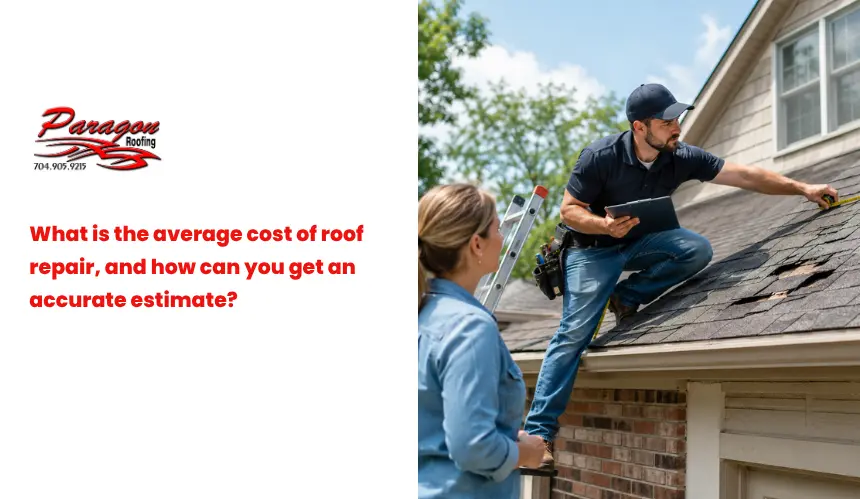
What is the average cost of roof repair, and how can you get an accurate estimate?
Roof repair costs vary significantly depending on the type of roofing material, the severity of damage, labor complexity, structural involvement, moisture exposure, and accessibility conditions. Many homeowners expect roofing repairs to fall within a simple price range, but roofing systems function as interconnected structural assemblies, where small visible problems may indicate larger hidden deterioration beneath the surface.
A minor flashing repair may cost relatively little, whereas moisture intrusion beneath shingles, damaged roof decking, ventilation failure, or widespread storm damage can substantially increase repair complexity. Roofing contractors also evaluate slope steepness, roof height, drainage configuration, material availability, and safety requirements when preparing repair estimates.
Understanding how roof repair pricing works helps homeowners avoid unrealistic budgeting expectations while improving decision-making during inspections and contractor comparisons. The following sections explain the factors that influence roof repair costs, why pricing varies between roofing systems, and how professional contractors create accurate repair estimates.
Why Roof Repair Costs Vary So Widely
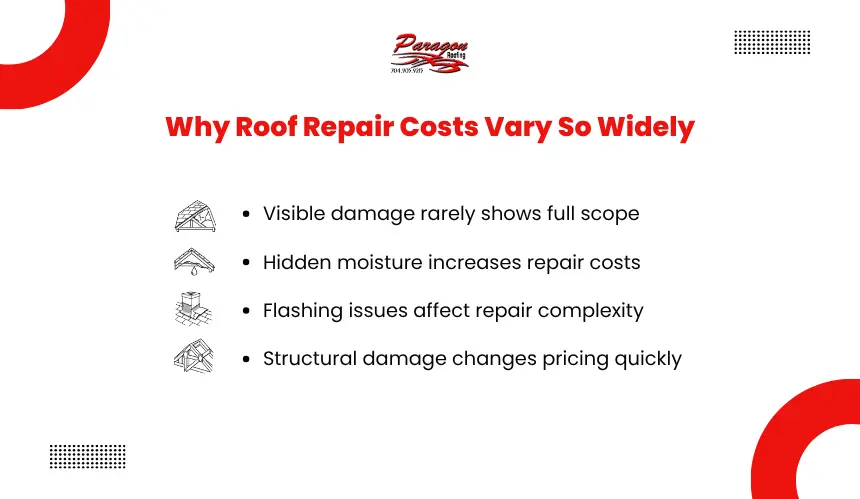
Roof repair pricing is influenced by more than the visible surface damage. Roofing contractors evaluate whether underlying structural systems, moisture barriers, flashing assemblies, insulation layers, or drainage pathways have also been affected.
Two roofs with similar visible damage may require completely different repair scopes depending on the extent of hidden deterioration beneath the roofing surface.
What Factors Most Commonly Affect Roof Repair Pricing?
Several operational and structural variables directly influence repair costs during roofing projects.
Common pricing factors include:
- Roofing material type
- Extent of water damage
- Roof slope and accessibility
- Flashing condition
- Structural decking deterioration
- Ventilation issues
- Labor complexity
- Emergency repair requirements
- Roof height and safety setup
- Material availability
Each variable affects labor time, repair difficulty, and replacement requirements differently.
Why Hidden Moisture Damage Increases Repair Costs
Roof leaks rarely remain isolated to the visible damaged area. Water may travel beneath shingles, underlayment, decking seams, insulation layers, or rafters before becoming noticeable inside the property.
This hidden moisture movement can contribute to:
- Deck rot
- Mold growth
- Insulation deterioration
- Structural weakening
- Fastener corrosion
- Ventilation imbalance
Once moisture spreads beneath the roofing system, repairs often become more extensive than originally expected.
Common Roof Repairs And Their Typical Cost Ranges
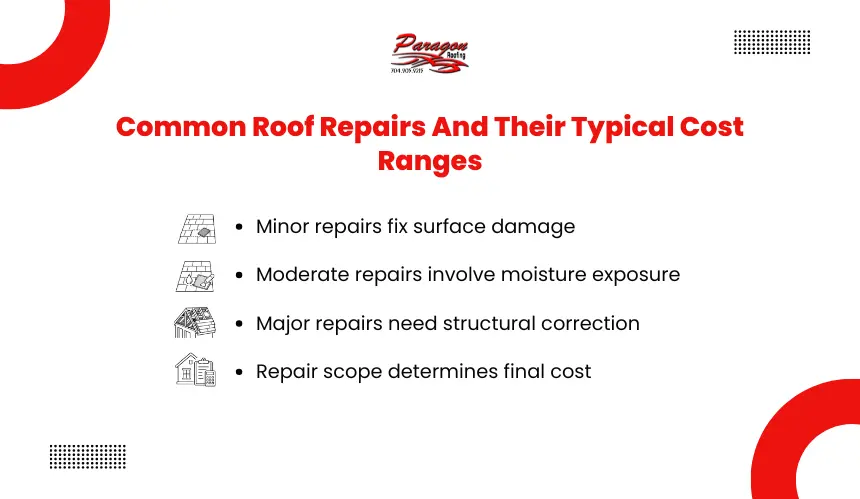
Roof repair costs vary by repair category. Smaller surface-level corrections generally cost less than repairs involving structural components, moisture intrusion, or widespread roofing system deterioration.
Professional contractors typically categorize repairs by complexity and scope.
Minor Roof Repairs Usually Involve Surface-Level Damage
Minor roofing repairs generally affect isolated sections of the roof without significant structural involvement.
These repairs may include:
- Replacing missing shingles
- Small flashing corrections
- Vent boot replacement
- Isolated leak sealing
- Fastener replacement
- Minor gutter adjustments
Average minor roof repair costs typically range from $150 to $800, depending on the roofing material and labor conditions.
Moderate Roofing Repairs Often Involve Moisture Exposure
Moderate roof repairs usually involve deeper involvement of the roofing system, with moisture infiltration already affecting surrounding materials.
These repairs may include:
- Partial decking replacement
- Valley flashing repairs
- Chimney flashing correction
- Leak tracing procedures
- Underlayment replacement
- Drainage correction
Moderate roofing repairs typically range from $800 to $3,000, depending on the extent of structural involvement and access conditions.
Major Roof Repairs Can Approach Partial Replacement Costs
Severe roofing damage may require extensive structural correction or large-area roofing reconstruction. In these situations, repair pricing may begin approaching partial roof replacement costs.
Major repair situations may involve:
- Extensive storm damage
- Structural sagging
- Widespread moisture intrusion
- Large decking replacement
- Major ventilation correction
- Severe flashing failure
Major repairs often exceed $3,000 and may rise substantially depending on roof size and material complexity.
Roofing Material Type Strongly Influences Repair Pricing
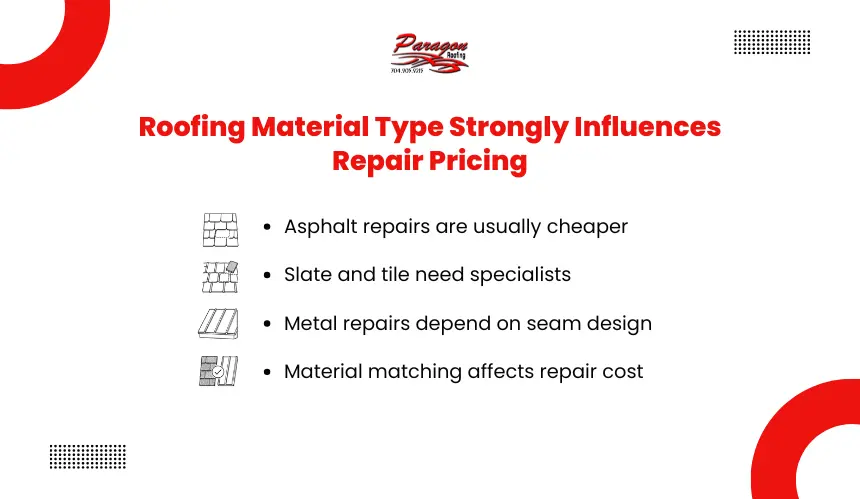
Different roofing materials require different installation methods, repair procedures, safety equipment, and labor specialization. As a result, the selection of roofing materials directly affects repair cost expectations.
Some materials are easier to replace individually, while others require specialized repair expertise.
Why Asphalt Shingle Repairs Are Usually Less Expensive
Asphalt shingles remain one of the most affordable roofing systems to repair because materials are widely available and installation methods are relatively standardized.
Advantages of asphalt repair include:
- Lower material costs
- Faster repair timelines
- Easier material matching
- Simpler replacement procedures
- Broad contractor familiarity
However, older shingles may still create color-matching challenges during localized repairs.
Why Slate And Tile Roof Repairs Cost More
Slate and tile roofing systems often require specialized handling because materials are heavier, more fragile, and more technically demanding to repair correctly.
Higher repair costs may result from:
- Specialized labor requirements
- Difficult tile matching
- Structural weight considerations
- Complex flashing integration
- Longer repair timelines
Improper repairs to slate or tile roofs may cause additional cracking or increased moisture vulnerability.
How Metal Roofing Repair Complexity Varies
Metal roofing repair pricing depends heavily on panel style, fastening method, coating systems, and seam design.
Standing seam systems may require:
- Specialized panel removal
- Seam resealing
- Fastener replacement
- Expansion allowance adjustments
- Coating restoration
These repairs often require experienced metal roofing contractors familiar with thermal movement behavior and moisture protection systems.
Roof Accessibility And Safety Conditions Affect Labor Costs
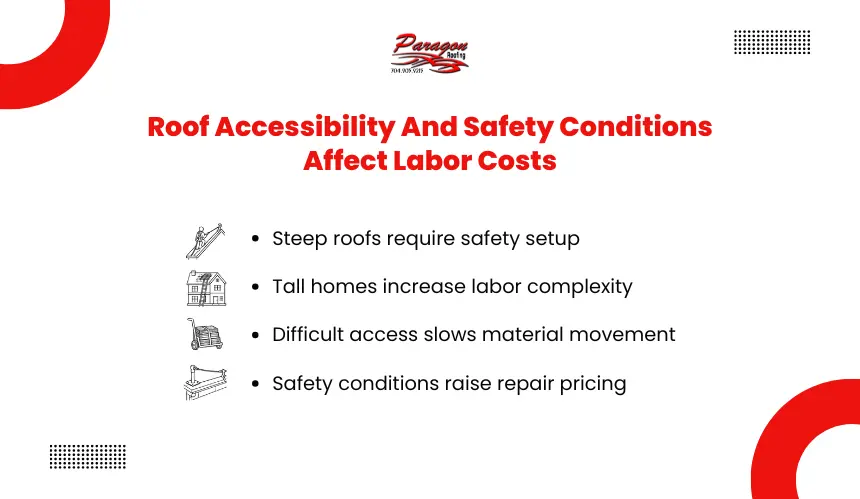
Roof accessibility plays a major role in determining labor pricing. Steeper roofs, taller structures, and difficult access conditions increase both repair complexity and required safety precautions.
Contractors factor these conditions into labor estimates because additional safety setup increases project time and operational risk.
Why Steep Roof Slopes Increase Repair Costs
Steep roofing systems require slower movement, additional harness systems, safety anchoring, and specialized equipment during repairs.
This often increases:
- Labor time
- Safety preparation
- Equipment requirements
- Crew coordination complexity
High-pitch roofing systems may also reduce material transport efficiency during repair work.
How Multi-Story Homes Affect Roofing Estimates
Taller properties increase labor complexity because contractors must manage additional ladder setup, fall-protection systems, debris-control procedures, and material-transportation challenges.
Multi-story roofing repairs may involve:
- Extended safety staging
- Additional equipment use
- Slower material movement
- Increased labor coordination
These operational factors commonly raise labor pricing compared to single-story roof repairs.
Why Professional Roof Inspections Improve Estimate Accuracy
Accurate roof repair estimates depend heavily on identifying the full scope of roofing damage before repairs begin. Surface-level visual observations alone rarely provide enough information to predict the complete repair requirement.
Professional inspections help contractors identify structural, moisture-related, and ventilation-related issues hidden beneath visible roofing materials.
What Contractors Look For During Repair Inspections
Roofing inspections evaluate both visible and concealed conditions of the system that may affect the scope of repair.
Contractors commonly inspect:
- Flashing condition
- Underlayment exposure
- Decking moisture damage
- Ventilation performance
- Drainage pathways
- Structural movement
- Sealant deterioration
- Fastener integrity
- Roof penetrations
These evaluations help reduce inaccurate pricing caused by hidden damage discovered later.
Why Low Estimates Sometimes Become More Expensive Later
Extremely low roofing estimates may not fully account for hidden moisture intrusion, structural deterioration, or the proper integration of flashing.
Incomplete estimates can lead to:
- Unexpected cost increases
- Incomplete repairs
- Recurring leaks
- Lower-quality materials
- Insufficient moisture protection
Detailed inspections help contractors create more realistic repair projections from the beginning.
How Homeowners Can Get More Accurate Roof Repair Estimates
Many homeowners compare estimates based solely on total price rather than on repair scope and quality. However, accurate roofing estimates depend on how thoroughly the contractor evaluates the roofing system itself.
Understanding the inspection and quoting process helps homeowners make more informed comparisons of contractors.
Why Multiple Roofing Estimates Are Important
Obtaining multiple professional estimates helps identify major differences in repair recommendations, labor scope, material selection, and the evaluation of hidden damage.
Comparing estimates may reveal differences in:
- Repair methodology
- Material quality
- Ventilation recommendations
- Flashing replacement scope
- Structural repair inclusion
- Warranty coverage
This process helps homeowners avoid incomplete repair planning.
What Questions Should Be Asked During Roofing Estimates?
Homeowners should ask contractors detailed questions regarding the repair scope and long-term system protection.
Important questions may include:
- What caused the roofing damage?
- Is structural decking affected?
- Will flashing be replaced?
- Are ventilation problems contributing?
- Is moisture trapped beneath materials?
- Are temporary repairs sufficient?
- What warranties are included?
These discussions help clarify whether the estimate addresses root causes or only surface symptoms.
Final Perspective
Roof repair costs vary because roofing systems involve far more than just the visible exterior materials. Moisture migration, structural decking condition, ventilation performance, flashing integration, roof accessibility, and material type all influence repair complexity and labor requirements.
Accurate roof repair estimates depend on detailed inspections that evaluate both visible and hidden conditions of the system. Understanding how contractors calculate repair costs helps homeowners make more informed decisions about budgeting, comparing contractors, repair planning, and long-term roof protection.
Frequently Asked Questions
Average roof repair costs typically range from approximately $150 for minor repairs to several thousand dollars for major structural or moisture-related damage. Final pricing depends on the roofing material, labor complexity, accessibility, severity of water intrusion, and the overall repair scope.
Different contractors may evaluate roofing damage differently depending on inspection depth, material quality, repair methodology, scope of flashing replacement, and structural involvement. Some estimates also include ventilation-correction or moisture-protection upgrades that others may overlook.
Water intrusion often spreads beneath roofing materials before visible interior damage appears. Moisture may affect decking, rafters, insulation, fasteners, and ventilation systems over time, increasing repair complexity and increasing the risk of long-term structural deterioration.
Insurance coverage depends heavily on the source of roofing damage. Storm-related events such as hail, wind, or falling debris are often covered, while gradual deterioration from aging or neglected maintenance may not qualify under many policies.
Professional inspections help identify hidden moisture damage, flashing failures, ventilation imbalances, drainage issues, and structural deterioration that may not be visible on the surface. Accurate inspections improve repair planning and reduce unexpected cost increases later.
Extensive structural deterioration, widespread moisture damage, repeated leak patterns, or aging roofing systems nearing the end of their lifespan may make full replacement more cost-effective than repeated repairs over time.