- Paragon-roofing
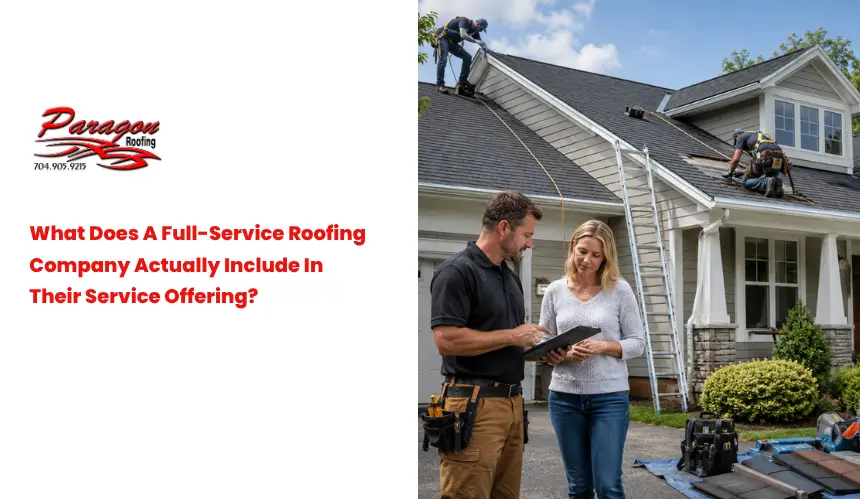
What Does A Full-Service Roofing Company Actually Include In Their Service Offering?
Many property owners assume roofing companies only install or replace roofs, but a full-service roofing company typically provides a much broader range of structural, preventive, diagnostic, and repair-related services. Roofing systems are complex assemblies involving drainage management, waterproofing layers, flashing integration, attic ventilation, insulation coordination, structural decking, and exterior weather protection. Because of this, professional roofing contractors often handle far more than visible shingle replacement.
A full-service roofing company typically supports the entire roofing lifecycle, including inspections, maintenance, leak diagnostics, storm-damage assessment, repairs, material replacement, ventilation improvements, emergency response, and long-term roof performance planning. Some companies also manage gutter systems, skylights, chimney flashing, roof coatings, and insurance documentation, depending on the property type and roofing structure.
Understanding what full-service roofing actually includes helps homeowners and commercial property owners make more informed decisions about maintenance planning, contractor selection, roof longevity, and structural protection. The following sections explain the major services commonly provided by full-service roofing contractors and why each service matters operationally.
Roof Inspections Are One Of The Most Important Core Services
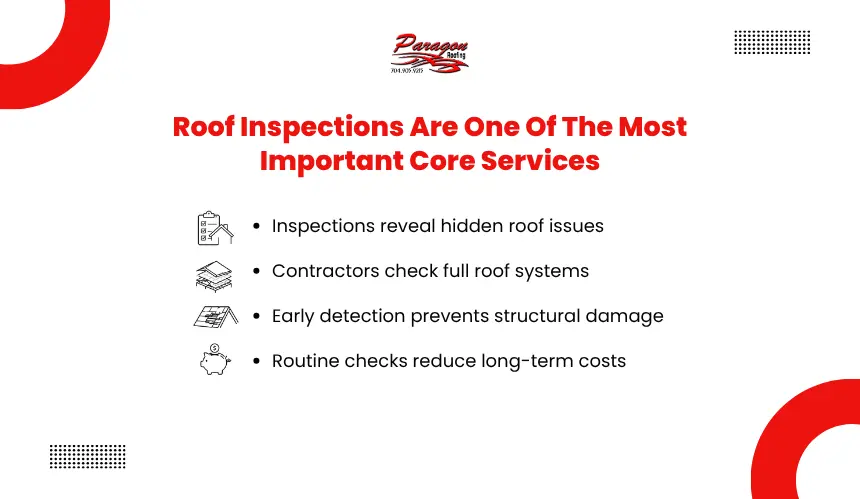
Roof inspections form the foundation of most roofing service plans because many roofing problems begin developing long before visible interior damage appears. A full-service roofing company typically performs both routine inspections and problem-focused evaluations to identify structural vulnerabilities, moisture risks, drainage issues, and material deterioration.
Professional inspections help property owners understand the actual condition of the roofing system rather than relying only on surface appearance.
What Contractors Evaluate During Roof Inspections
Roof inspections involve much more than checking shingles. Contractors examine multiple interconnected roofing components to determine whether water intrusion, ventilation imbalance, or material wear is developing beneath the surface.
Inspection areas commonly include:
- Shingle or tile condition
- Flashing integrity
- Roof penetrations
- Ventilation systems
- Chimney integration points
- Skylight seals
- Gutters and drainage paths
- Underlayment exposure
- Moisture intrusion signs
- Structural decking condition
These evaluations help uncover developing issues before larger structural damage occurs.
Why Preventive Roof Inspections Reduce Long-Term Costs
Minor roofing problems often become significantly more expensive when left unresolved. Small, flashing gaps, drainage blockages, or isolated shingle damage may allow moisture to infiltrate beneath the roofing system.
Over time, this can contribute to:
- Deck rot
- Mold development
- Insulation damage
- Interior ceiling stains
- Structural deterioration
- Ventilation imbalance
Routine inspections help identify these problems earlier, reducing the likelihood of costly repairs later.
Roof Repair Services Cover More Than Leak Patching
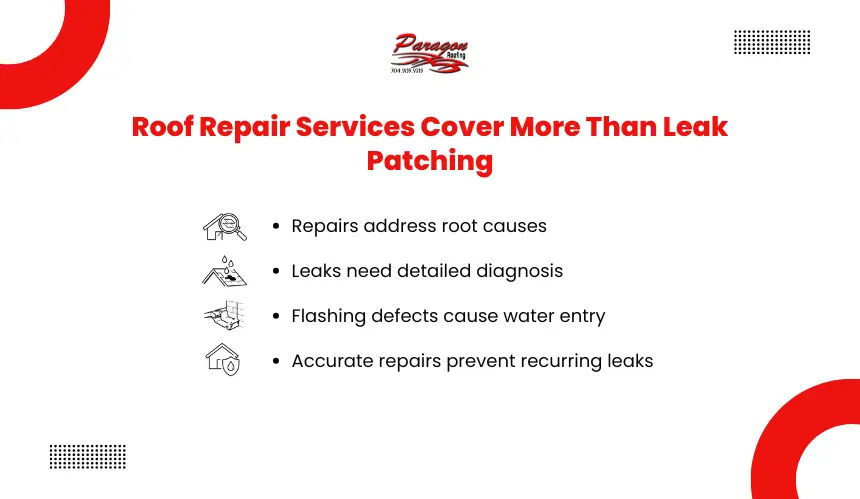
Roof repairs are among the most commonly requested services provided by full-service roofing contractors. However, professional roof repair involves diagnosing the underlying cause of failure rather than simply covering visible damage.
Water intrusion may originate from flashing defects, ventilation issues, drainage failures, deteriorated underlayment, or structural movement, rather than from the visible leak location itself.
What Types Of Roofing Repairs Are Common?
Roofing contractors typically handle a wide variety of repair situations affecting both residential and commercial roofing systems.
Common repair services include:
- Missing shingle replacement
- Flashing repairs
- Roof leak diagnostics
- Storm damage repair
- Vent boot replacement
- Skylight sealing
- Chimney flashing correction
- Roof decking repair
- Fastener replacement
- Drainage correction
Each repair type addresses a different operational failure within the roofing system.
Why Leak Detection Requires Detailed Diagnosis
Roof leaks often travel along rafters, decking surfaces, insulation layers, or structural framing before becoming visible inside the property. This makes leak origin points difficult to identify without detailed inspection procedures.
Professional contractors evaluate:
- Water migration patterns
- Flashing transition points
- Penetration seals
- Roof slope drainage behavior
- Moisture accumulation zones
Accurate diagnosis helps prevent recurring leaks caused by incomplete repairs.
Roof Replacement Services Involve Full System Planning
A full roof replacement includes far more than installing new shingles or roofing panels. Professional roofing companies evaluate structural compatibility, ventilation performance, underlayment protection, drainage systems, flashing integration, and long-term weather resistance before replacement work begins.
The replacement process is designed to rebuild the roof as a complete protective system rather than replacing only surface materials.
What Happens During A Full Roof Replacement?
Roof replacement projects generally involve multiple phases to ensure the new roofing system performs properly under future environmental exposure.
The process may include:
- Removing old roofing materials
- Inspecting structural decking
- Replacing damaged wood sections
- Installing underlayment barriers
- Integrating flashing systems
- Improving ventilation pathways
- Installing roofing materials
- Sealing penetrations
- Testing drainage performance
Each phase affects long-term roof durability and moisture resistance.
Why Ventilation Matters During Roof Replacement
Attic ventilation directly affects roof temperature regulation, moisture control, and material lifespan. Poor ventilation can trap heat and moisture beneath the roof assembly, accelerating the deterioration of shingles, decking, and insulation.
Ventilation improvements may help reduce:
- Heat buildup
- Moisture accumulation
- Mold development
- Ice dam formation
- Premature shingle aging
Full-service roofing companies often evaluate ventilation balance during planning for replacements.
Emergency Roofing Services Help Prevent Structural Escalation
Storm damage, fallen debris, severe leaks, and wind uplift events may create sudden roofing emergencies requiring immediate stabilization. Full-service roofing companies frequently provide emergency response services to reduce further structural exposure before permanent repairs are completed.
Emergency roofing services focus on protecting the structure from worsening water intrusion and environmental damage.
What Situations Require Emergency Roofing Response?
Several roofing conditions may require urgent contractor intervention to reduce ongoing risks of structural damage.
Emergency situations commonly include:
- Storm-related roof punctures
- Large active leaks
- Wind-damaged roofing sections
- Fallen tree impact
- Exposed underlayment
- Flashing detachment
- Structural roof collapse risks
Rapid response helps minimize moisture intrusion into insulation, drywall, and framing systems.
How Temporary Roof Protection Helps Limit Damage
Temporary stabilization methods help protect exposed areas until permanent repairs can be completed safely.
Emergency mitigation procedures may involve:
- Roof tarping
- Debris removal
- Temporary sealing
- Drainage diversion
- Structural bracing
- Moisture exposure reduction
These measures help prevent secondary structural deterioration following major roofing damage events.
Full-Service Roofing Companies Often Handle Gutters And Drainage Systems
Roof drainage management plays a major role in protecting both the roof and the surrounding structure. Water that cannot drain properly may contribute to fascia deterioration, siding damage, foundation saturation, and roof edge rot.
Because of this, many full-service roofing companies also install, repair, and maintain gutter systems.
Why Gutters Are Closely Connected To Roof Performance
Roofing systems rely on controlled water movement to prevent standing moisture and overflow damage. Gutters help direct water safely away from the edges of the roof, exterior walls, and foundation zones.
Poor drainage may contribute to:
- Fascia rot
- Soil erosion
- Siding deterioration
- Basement moisture issues
- Ice dam formation
- Roof edge damage
Contractors often inspect drainage pathways during roofing evaluations.
What Gutter Services Roofing Companies Typically Provide
Full-service roofing companies may offer several gutter-related services as part of broader roof protection planning.
Common gutter services include:
- Gutter installation
- Downspout replacement
- Gutter guard installation
- Drainage slope correction
- Debris removal
- Leak sealing
- Fastener replacement
These services help maintain effective roof drainage performance during heavy rainfall and seasonal weather exposure.
Maintenance Programs Help Extend Roof Lifespan
Preventive roof maintenance is one of the most overlooked services provided by roofing contractors. Many roofing systems deteriorate prematurely because small maintenance issues remain unresolved for extended periods.
Full-service roofing companies often offer scheduled maintenance programs to regularly monitor roof condition.
What Is Included In Roof Maintenance Programs?
Roof maintenance programs generally involve recurring inspections, cleaning, and minor repairs to reduce long-term deterioration.
Maintenance plans may include:
- Debris removal
- Drainage cleaning
- Sealant inspection
- Flashing checks
- Minor repairs
- Moisture monitoring
- Roof surface cleaning
- Ventilation evaluation
These services help preserve the roofing system’s performance throughout changing weather conditions.
Why Preventive Maintenance Improves Roof Longevity
Roofs experience continuous environmental stress from sunlight, rain, wind, thermal expansion, and seasonal temperature fluctuation. Small vulnerabilities gradually expand when routine servicing is neglected.
Preventive maintenance helps reduce:
- Moisture infiltration
- Material cracking
- Flashing separation
- Drainage blockages
- Premature material aging
Long-term roof performance often depends heavily on consistent maintenance rather than material quality alone.
Final Perspective
A full-service roofing company provides far more than simple roof installation or leak repair. Modern roofing systems involve interconnected structural, drainage, ventilation, waterproofing, and maintenance components that require continuous evaluation and professional management over time.
From inspections and emergency response to full replacements, gutter systems, preventive maintenance, and moisture diagnostics, full-service roofing contractors help preserve structural durability and long-term weather protection. Understanding the full scope of roofing services allows homeowners and property managers to make more informed decisions regarding roof performance, repair planning, and long-term property protection.
Frequently Asked Questions
Full-service roofing companies commonly provide inspections, repairs, roof replacements, leak diagnostics, storm-damage assessments, maintenance programs, gutter services, flashing repairs, ventilation evaluations, and emergency roofing response. Some contractors also handle skylights, roof coatings, chimney flashing, and insurance-related documentation support.
Many roofing problems begin beneath the surface before interior water stains appear. Inspections help identify damaged flashing, deteriorating underlayment, moisture intrusion, drainage blockages, and structural wear early enough to prevent costly repairs and long-term structural deterioration.
Professional roof replacement projects typically include an evaluation of structural decking because hidden moisture damage may exist beneath old roofing materials. Contractors inspect the condition of the wood, ventilation pathways, drainage behavior, and underlayment performance before installing the new roofing system.
Most roofing systems benefit from inspections and maintenance at least once, and preferably twice, per year, depending on environmental exposure, roof age, nearby vegetation, and weather conditions. Seasonal servicing helps identify developing problems before severe deterioration or water intrusion occurs.
Recurring leaks often occur when the original source of water intrusion was not accurately diagnosed. Water may travel through structural framing, flashing transitions, or ventilation openings before becoming visible, making detailed leak tracing essential for long-term repair success.
Improper drainage may trap moisture near roofing edges and fascia systems, increasing the risk of wood rot, ice dam formation, and moisture deterioration. Functional gutters help direct water away from the structure and support long-term stability of the roofing system.